
Your Guide to 2026 Industrial Metal Fabrication Trends
Forming manufacturing done the right way. Get consistent forming services you can rely on so your work keeps moving.
The world seems to keep moving faster, and the drive to create and build more things at a faster pace means good things for industrial metal fabrication. This growth means new possibilities for manufacturers, but it could also bring new challenges.
Here are the top trends that will shape industrial metal fabrication in 2026 and beyond.
01.
Additive Manufacturing Brings Next-Level Safety and Precision
Additive manufacturing technology and processes have been slowly gaining in popularity because they offer safer working conditions and impressive precision.
Usually, when we hear the term “Additive Manufacturing” we think about 3D printing, but you’ll see additional features and tools that fall under this umbrella with promising features that will help metal fabrication.
Paste-Based Metal Extrusion (PME)
New desktop metal printing at room temperature using metal pastes instead of powders. It’s meant to be drastically safer and lower cost than traditional powder-bed systems.
Cold Spray Additive Manufacturing
High-velocity “cold” fabrication that welds metal particles without melting, enabling rapid, localized builds with less heat distortion.
Electron-Beam Freeform Fabrication (EBF³)
Vacuum additive manufacturing using an electron beam to melt wire and build near-net-shape parts with minimal waste. It looks most promising for aerospace and large components.
Vat Photopolymerization Metal “Growth”
This is still early in development, but lab research is showing metal structures “grown” via hydrogel templates and metal infusion offering ultra-strong, low-shrinkage parts.
02.
Advanced Metal Cutting Technologies Bring Speed and Efficiency
Energy-Efficient Cutting
Laser and plasma systems with improved power management reduce operational cost and carbon footprint.
Fiber Laser Advancements
High-power fiber lasers deliver faster cutting speeds, lower energy use, minimal maintenance, and excellent cut quality even on aluminum, copper, and other challenging metals.
Adaptive Beam & Ultrafast Lasers
New beam shaping and ultrafast pulsed lasers yield extremely smooth cuts with reduced heat-affected zones and are suitable for intricate designs and heat-sensitive applications.
Hybrid Laser Processes
Combining traditional laser cutting with other processes (e.g., additive manufacturing or hybrid multi-wavelength lasers) enables multifunctional fabrication in a single system.
Industry 4.0 Connectivity
Laser cutters are increasingly connected to factory networks for predictive maintenance, digital twin integration, and automated quality control.
03.
Additive Manufacturing Brings Next-Level Safety and Precision
Smart factories seem to be getting even smarter and more accessible. Automation and AI continue to help metal fabricators save time and offer more safety by detecting and anticipating challenges and opportunities in real-time.
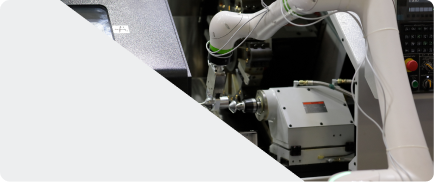
AI-Enhanced Robotics and Cobots
Robots with machine learning insight handle welding, cutting, assembly, and quality control with greater consistency and safety, from heavy automation to cobots that safely work alongside humans.

AI Quality Control & Predictive Maintenance
Machine vision and AI models detect defects in real time, reduce scrap, and predict machine failure before it happens.
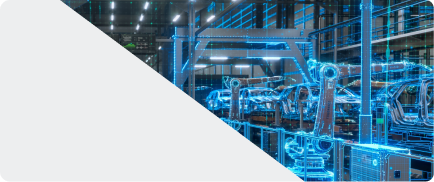
Digital Twins & IoT Integration
Real-time digital replicas of fabrication systems help optimize production workflows, simulate changes, and accelerate decision-making.
04.
Material Innovations Deliver New Possibilities in Sustainability and Lightweight Parts
Metal fabricators are used to working with all kinds of materials ranging from steel, aluminum, brass, copper, etc. These materials will be stronger and more lightweight with these strides made in material innovation.
Advanced Alloys
High-strength, lightweight materials (high-entropy, amorphous metals) improve performance.
Advanced Alloys
High-strength, lightweight materials (high-entropy, amorphous metals) improve performance.
Surface Enhancement
Techniques like laser surface structuring and burnishing improve fatigue life.
Surface Enhancement
Techniques like laser surface structuring and burnishing improve fatigue life.
Waste Optimization
Smart nesting and adaptive cutting software reduce scrap across laser and plasma workflows.
Waste Optimization
Smart nesting and adaptive cutting software reduce scrap across laser and plasma workflows.
Whip offers innovation and customization for your metal fabrication projects
The future of industrial metal fabrication is bright, and these trends are only the start to a future filled with parts that are made safely, quickly, and more accurately than ever before.
Whip Industries can help you realize your vision by bringing engineering, laser cutting, plasma cutting, forming, welding, shearing, robotic welding, powder coating painting, saw cutting, and assembly expertise to your custom metal fabrication projects